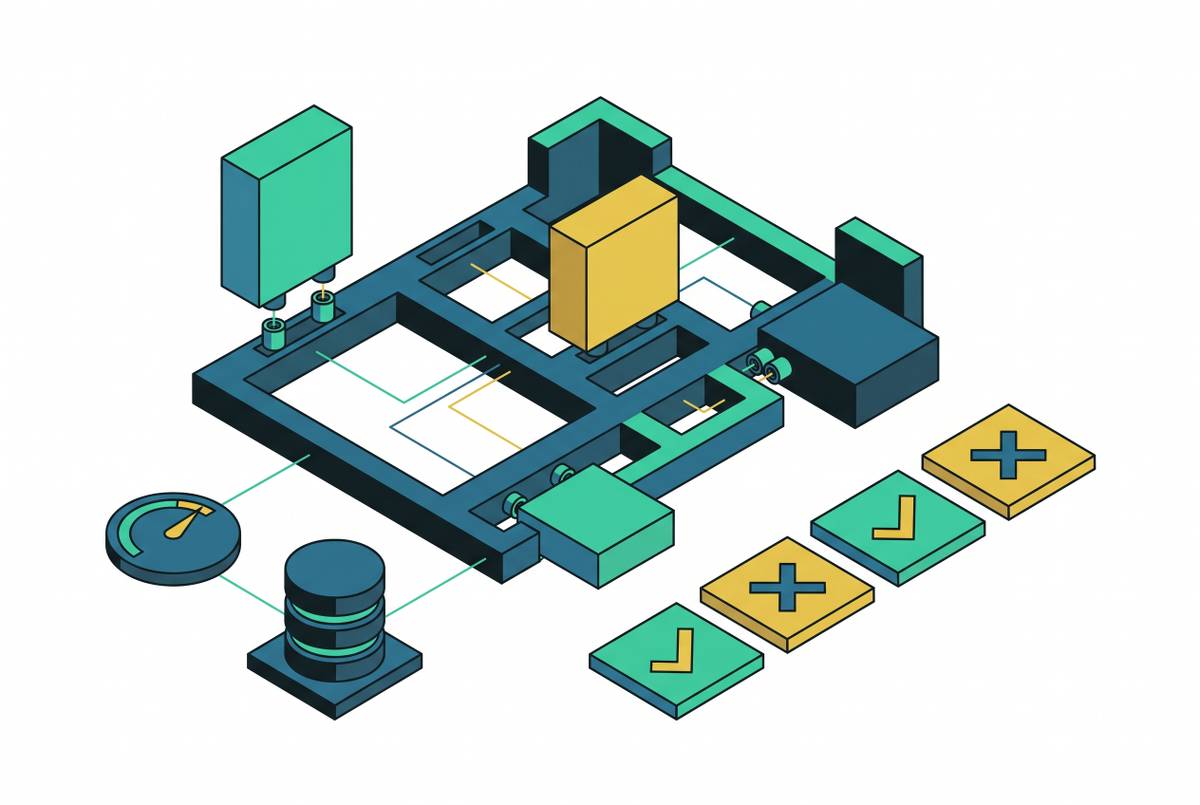
Shadow Deployment as an Online Evaluation Strategy for Agent Changes
Shadow deployment validates agent changes against live traffic before users see them.
Shadow deployment solves a specific problem: it lets a team score a candidate prompt, tool schema, or workflow against the real, live distribution of production requests, without that candidate ever reaching a user. It is the mechanism that closes the gap offline evals cannot close, and it belongs in the release pipeline for any agent system between trace-driven diagnosis and shipping a fix. The rest of this piece lays out what it is, what it tests, how to instrument it, and how to read the results without either shipping too early or stalling for weeks on data that will never feel complete.
Why offline evals cannot fully validate agent changes
A held-out dataset is a snapshot. Production traffic is not. However carefully a team curates its eval set, that set freezes a sample of past behavior at the moment it was built, while real users keep generating phrasings, intent combinations, and edge cases the sample never anticipated. It is a structural mismatch between a fixed artifact and a distribution that keeps moving, not a quality problem that a bigger or better-labeled dataset fixes.
If you build agent systems for 2026, that mismatch weighs more than it did for single-turn chat. A change to any one layer in that chain can create a schema-validation failure several spans downstream, or it can set off a cascading failure in a multi-agent handoff, and a flat eval set built from isolated input-output pairs will not exercise that path. A static benchmark cannot reproduce "real conditions" by definition, so the failure stays invisible until the full chain runs, under real conditions, against real inputs.
This is the specific gap shadow deployment exists to fill: it scores a candidate against the live distribution of production requests, under the same multi-step conditions those requests actually produce, before a single user sees the candidate's output.
What shadow deployment tests
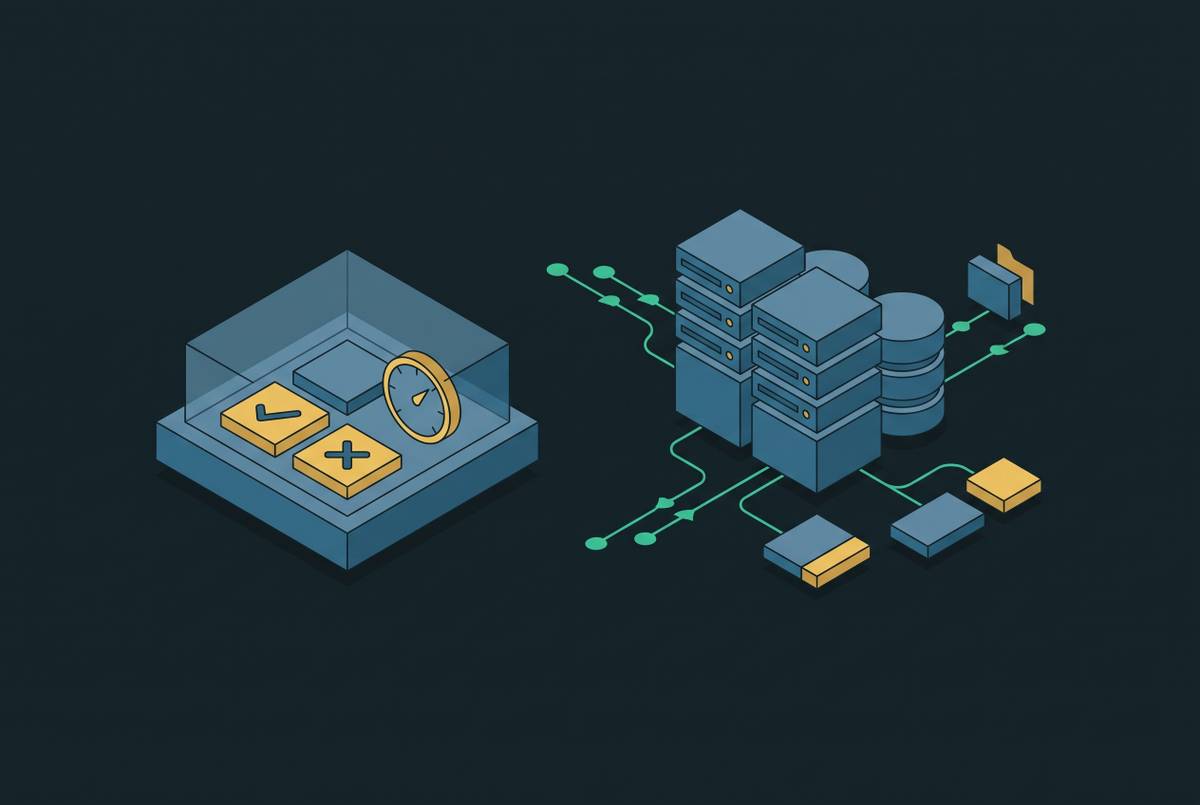
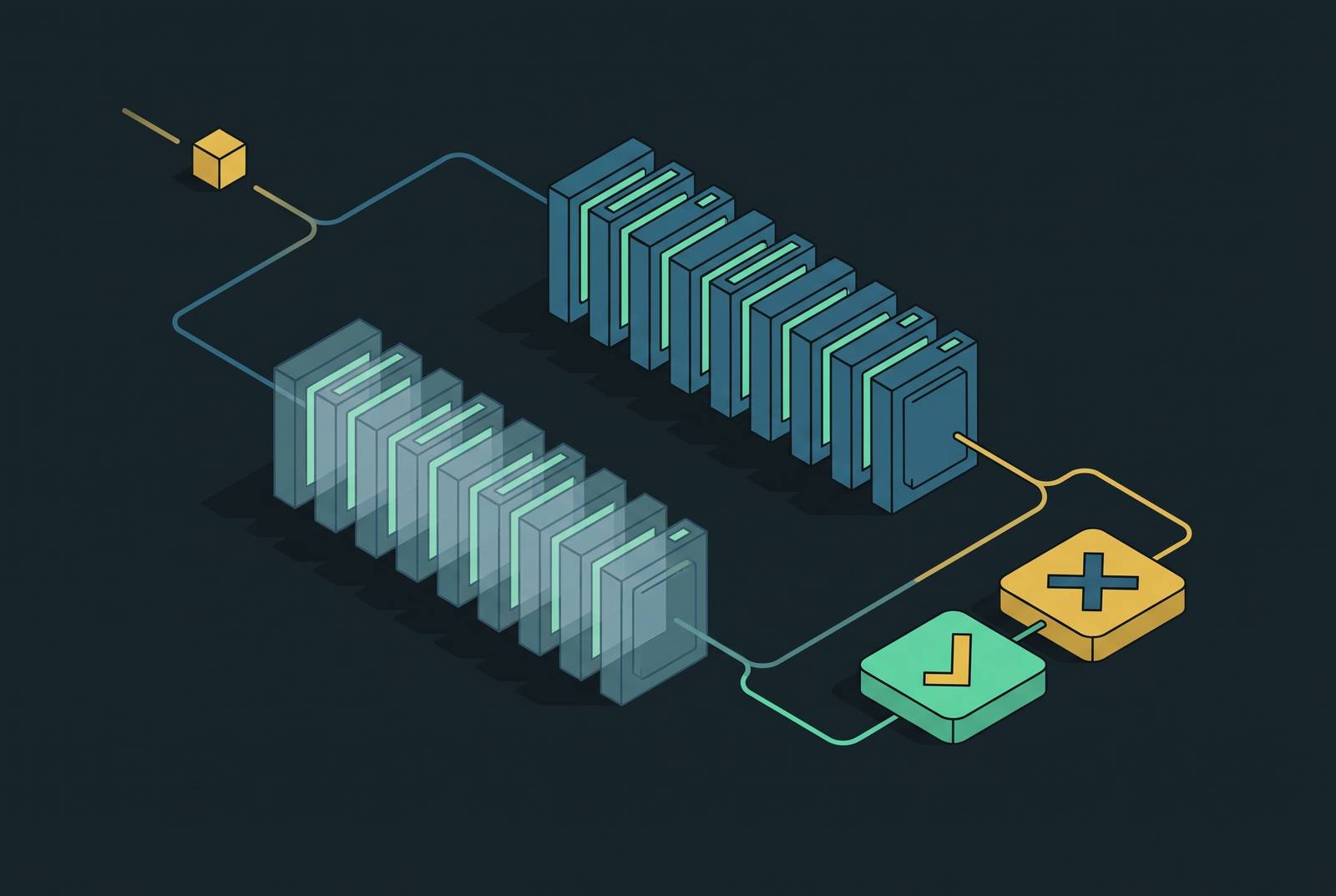
Shadow deployment runs a candidate model, prompt, routing policy, or guardrail next to production, but it never lets that candidate serve users. It handles the real request and sends back the real response. The shadow path receives a mirrored copy of that same request and records its own output, latency, cost, error behavior, and eval scores. No user sees the shadow path's answer. The team sees everything about how it performed.
That is why shadow deployment works so well for agent systems. It can show that a schema change passes cleanly at the point of change but breaks validation three spans later. It can show that a workflow edit sets off a cascading failure across a multi-agent handoff. None of these appear in a side-by-side comparison of two single outputs, because the failure is not in the output, it is in the path the agent took to get there.
People often confuse it with canary, but the two answer different questions. A candidate can win on a quality metric in shadow and still lose on retry rate in canary. That is not a contradiction. The two stages measure different things, so if you skip either one, you leave a blind spot. If a team skips shadow, the first time the candidate touches a real user becomes the first time the team learns its failure modes. But if you skip canary, you can wait indefinitely for offline numbers to feel sufficient, so a fix that should ship in a week stalls for six.
Running shadow on all traffic is not always practical, given the duplication overhead of running every request twice. Mirror routing handles this by sampling: a configured rate, for example 5% of eligible support-agent requests in a 2026 shadow deployment, controls how much traffic reaches the shadow path. Production traces capture the real distribution that offline eval sets structurally cannot, and that is the reason teams building systematic approaches to agent reliability have moved toward treating shadow deployment as a required validation step.
The harness layers shadow deployment tests
What a shadow run surfaces depends on the harness, not the model. An agent harness is the code that constructs prompts, calls tools, manages control flow, and feeds tool outputs back into the next step of reasoning. When a team changes a prompt template, a tool schema, a routing rule, or a memory strategy, the harness is what changed, and the harness is what shadow deployment is actually testing.
Each layer fails differently, and some of those failures appear only once the full chain runs, so shadow catches what offline evals miss. A workflow change in a multi-agent system can work cleanly for the agent that owns it and still break the handoff to the next agent in the chain, producing a cascading failure that occurs only when agents are actually coordinating on live traffic.
Memory changes carry their own risk. A shadow run on a memory or summarization change is what reveals this disconnect before a user ever encounters it.
What this means for how shadow should be read: the candidate under evaluation is whichever harness layer changed, not the underlying model. If you treat shadow results as a model A/B test, you misread what the data is telling you and miss the actual job shadow deployment is doing, which is harness validation.
Instrumenting shadow runs for actionable data
A shadow run only produces useful data if you tag every call, pair it by trace ID, and score it. If a team skips any one of those three steps, the shadow deployment turns into a passive log: storage costs climb as both production and shadow outputs pile up, while the team learns nothing about quality.
The most common instrumentation mistake is mirroring requests without joining the primary and shadow outputs by trace ID. Without that join, pairwise comparison is impossible, because there is no way to match a given shadow response to the exact production response it should be compared against. If you segment by tenant, route, prompt version, and intent, you keep a safe-looking average from hiding a real regression.
Scoring needs to happen at the span level, as a planned part of the system, not as something bolted on after the fact. At minimum, you need a few categories of measurement on each shadow span. Take the shadow capture rate, the number of observed shadow calls divided by eligible requests: it confirms the configured sample rate is actually being applied, not silently drifting. And the shadow path's error feed needs its own review: a new cluster of failures appearing there, one that does not appear in production's error feed, is a signal worth acting on even when average quality scores look fine.
Alerting needs its own separation. Shadow provider errors should go to their own alert channel, not into the same pipeline as production SRE alerts, because candidate instability is not user impact and shouldn't page as though it were.
This is the engineering work that turns shadow deployment's distribution-matching power into something a team can act on. Shadow captures the full range of real requests and scores a candidate harness change against them without putting any user at risk, and this validation loop pairs naturally with replay-based testing, which checks a proposed fix against the historical traces that exposed the original problem, so you can confirm it would have worked before it ever ships.
Reading shadow results: what a stop signal looks like versus acceptable drift
A shadow result is a distribution comparison rather than a single pass or fail grade, and reading it well means looking at cohorts, not just the overall average, because the overall average is exactly where real problems hide.
Several patterns in the data count as stop signals. A drop in a quality metric, even something as small as a 1.5-point decrease in Groundedness, is reason to stop and investigate, because that drop reflects behavior across the actual production distribution, not a handful of edge cases, even though no user has seen a single candidate response yet. And a regression confined to one cohort, a specific tenant, a specific language, a specific intent route, is a stop signal even when the global average looks clean. This last pattern is the one teams relying only on overall means miss most often.
Acceptable drift looks different. Minor latency variation that stays within SLO is fine. A team that decides what "good enough" means after it has already seen the results is not running a controlled experiment, it is rationalizing a number after the fact.
Even a clean shadow run is not approval to ship to everyone. It earns the candidate a canary stage, not a full rollout, because the signals that actually matter to users, feedback rate, retry rate, escalation, only exist once a real person is interacting with the candidate live. When shadow does surface a regression, the next step is not a guess. The failure has to be attributed to the specific harness layer responsible, prompt, tool schema, workflow, or memory, before anyone writes a fix. An unattributed failure produces a shot in the dark; an attributed one produces a targeted change.
Closing the loop: from a shadow failure to a validated fix
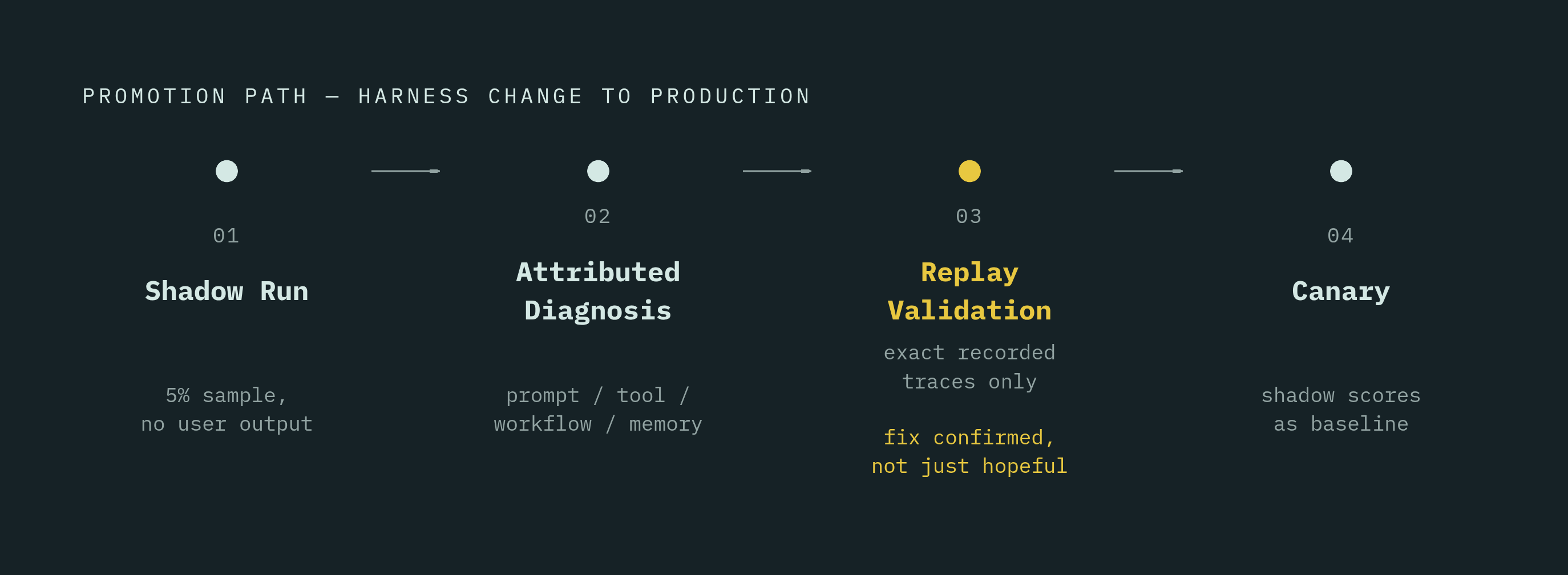
A shadow regression only matters if it leads somewhere. Finding a problem without a path to a validated fix makes shadow an alarm with no recovery, defeating the purpose of running it.
Attribution specificity is what makes a fix possible. If you don't know which layer caused a shadow run to fail, that failure tells you nothing useful. If you mis-attribute a schema breakage to prompt ambiguity, you rewrite the prompt without touching the actual schema problem, and the next shadow run fails again for the same underlying reason.
Replay validation is what separates a confirmed fix from a hopeful one. To replay, you run the proposed change against the recorded tool outputs and sandboxed side effects from the exact traces that exposed the original regression, then you check whether the fix resolves the failure on those specific cases, not on a fresh batch of hand-picked examples. Because shadow runs isolate failures to a specific harness layer, prompt, tool schema, workflow, or memory, teams can generate and test a targeted fix to that one layer, confirm it against the traces that caused the problem, and treat the result as a verified change.
None of this is reproducible without versioning. Prompt version, tool schema version, workflow version, and the experiment ID all need to be recorded together, so a failed shadow run can be reproduced exactly, and a fix can be confirmed as working under the same conditions that produced the original failure. A company running a shadow deployment against a changed tool schema would need that same version record to confirm its fix actually resolved the schema break at its source.
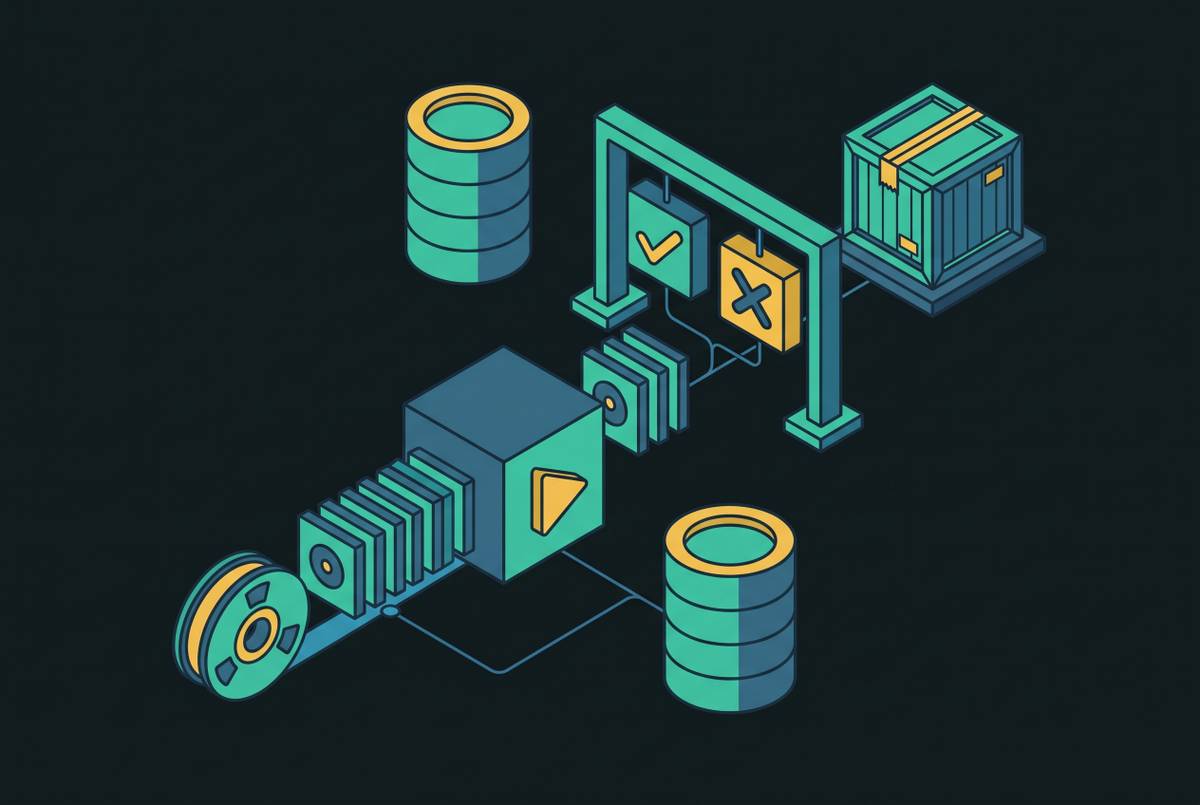
The promotion path after a validated fix follows in order: shadow pass, then canary on a stratified slice of live traffic, then full rollout, with the shadow eval scores serving as the baseline that canary's user-visible signals get compared against. Replay-based validation engines test fixes against historical traces and confirm a change would have prevented the original failure before it ships, making this loop dependable. Shipping a fix without that replay step is shipping blind. The fix might work. Nobody will know until a real user finds out the hard way.
Treating shadow deployment as a repeatable engineering discipline, not a one-time gate
Shadow deployment only earns its value if you run it continuously, against every harness change, not once at launch and never again. A team that shadow-tests its first release and nothing after has solved the problem of shipping once. It has not solved the problem of shipping the tenth time, or the hundredth.
Agent harnesses do not hold still. Prompts, tool schemas, routing policies, and memory configurations keep changing as teams respond to production failures, user feedback, and provider updates to the underlying models. Continual improvement to the harness requires continual signal about how it is actually behaving, not a signal collected once and treated as permanent.
Teams that skip this see the same failure pattern: a harness change ships without a shadow run, a regression builds quietly over the following weeks, and the first anyone hears of it is a customer ticket or a rising fallback rate. Shadow deployment was built to catch that exact failure mode before it reaches a user, but if you treat shadow as a one-time gate, it will eventually slip through anyway.
This difficulty compounds for systems that accumulate state over time. A system that passes evaluation at one point is not the same system after it has processed weeks of live traffic and updated its own memory and behavior in response. Keeping a change in production responsibly requires ongoing behavioral monitoring, not a single clearance that gets treated as good forever.
Shadow deployment, replay validation, and trace-driven attribution deserve the same rigor as code review and automated testing, because the harness layer is where most agent failures actually originate, and these three practices are the quality gate for that layer. A mature shadow practice looks consistent: every harness change triggers a shadow run automatically, thresholds are written down before the run starts, results are read by cohort rather than by global average, a stop signal triggers attributed diagnosis instead of a rollback guess, every validated fix passes through canary before full rollout, and the whole history stays versioned so any regression can be traced back to the exact change that caused it. That is what it looks like to run shadow deployment as engineering discipline rather than as a box checked once before launch and forgotten.
Sources
- Agents in the Wild: Where Research Meets Deployment
- DAREBench: Deployment-Aware and Reliable Evaluation of Models as Agents
- AgentDebugX: An Open-Source Toolkit for Failure Observability, Attribution, and Recovery in LLM Agents
- TRAJDEBUG: Tracing Error Lifecycle to Identify Critical Failures in Long-Horizon Agent Trajectories
- Diagnosing with Insights: Structured Analysis of Agent Failures via Behavioral Abstractions