Prompt Versioning and Change Management in Production Agents
Treat production prompts as versioned artifacts, not configuration files.

Production agent prompts determine how systems act and speak. Prompt versioning and change management must therefore cover the full execution artifact, from its inputs and dependencies to its production traces. To make that artifact reliable, teams need to put it through review, replay validation, and controlled rollout, then keep improving it.
Why production agent prompts are not configuration
A team adds three words to a customer service prompt to make it “more conversational”. Within hours, structured-output error rates shoot up, and engineers spend most of a day debugging infrastructure and code before they check the prompt. There is no version history and no rollback. The product manager who edited the config file had no reason to think the change was risky. The failure began with treating software that governs execution as an ordinary setting.
In a production agent, a prompt determines which tool gets called, which arguments are supplied, whether the agent retries or escalates, and whether its output matches a downstream schema. These decisions depend on the full harness, including the model, context, memory, skills, tools, policies, and execution scaffold. A prompt edit can change how those components interact even when the model checkpoint is byte-for-byte identical. Unlike a chatbot edit concerned with tone or phrasing, an agent prompt edit can change control flow. The size of the textual change is therefore a poor measure of its operational risk.
Hardcoding prompts in application code ties a system prompt fix to a code change, a PR, and a deployment, creating an hours-long cycle for a change that should move independently. Treating prompts as executable artifacts requires both a record of their behavior and a controlled way to change them. Neither an editable config file nor a string buried in code provides that discipline on its own.
What must be versioned and why prompt text alone is not enough
The artifact must contain more than the message text because the text alone does not define the request. A production prompt bundles system and user messages, template variables, the model name and pinned version, inference parameters such as temperature and max tokens, tool and function definitions, retrieval configuration, and the response schema. These components must be tracked as one coherent unit. For a multi-prompt agent, that unit must also capture the relationship between planning, tool-selection, execution, reflection, and memory prompts. If only the final model call is versioned, the record leaves out the decisions made before it.
A provider can silently update a model behind an alias, a changing retrieval index can return different documents, and a tool can return different results for identical arguments on another day. Versioning establishes the input side of the equation. Replayable runtimes therefore require versions for the prompt, model, tool schema, sandbox image, retrieval index, evaluator, and workflow code.
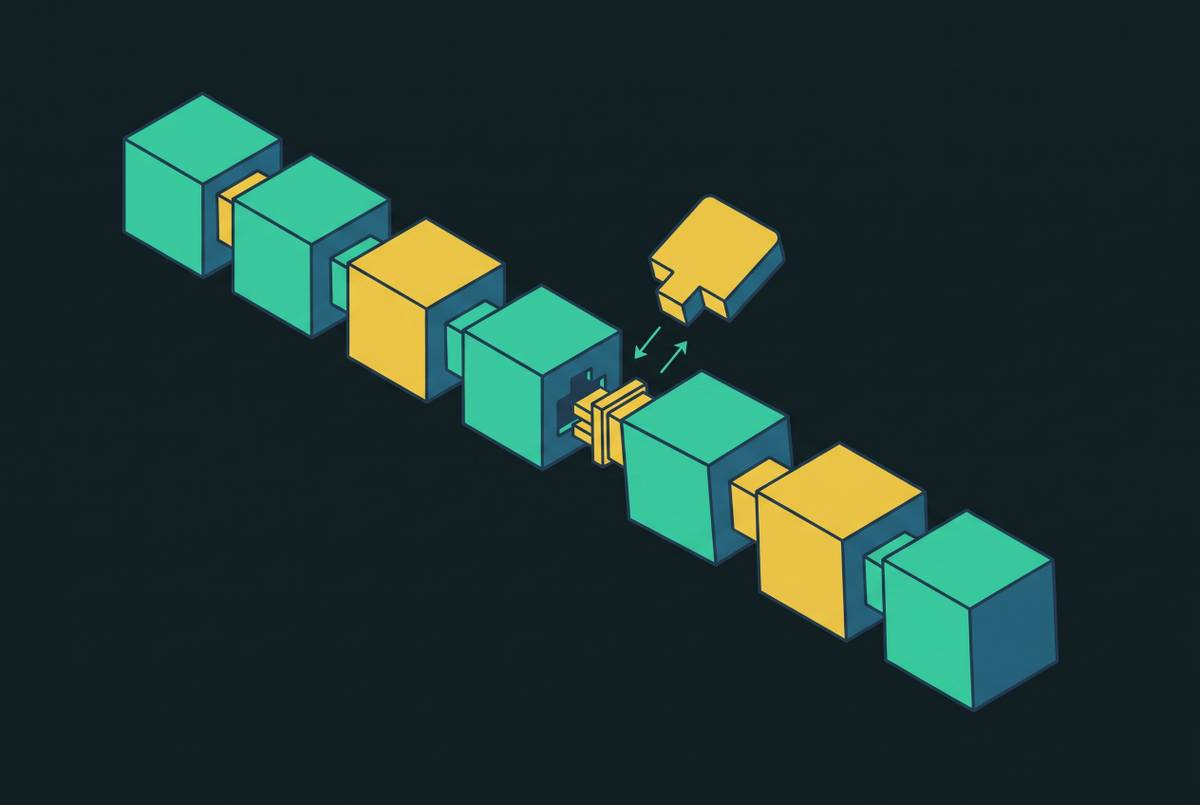
Once published to production, a version must be immutable, so even a typo fix creates a new version. Semantic versioning can express the expected impact, with MAJOR covering breaking changes to output format, persona, or model, MINOR covering additive capability, and PATCH covering wording that should not alter behavior. If evaluation reveals a measurable behavior change from a PATCH, the change should have been classified as MINOR or MAJOR. Alternatively, content-addressable IDs derive the identifier from the content, making changes detectable without manual version-bump decisions. Either scheme must preserve the answer to which artifact was running when an incident occurred.
How prompt changes compound into agent failures across layers
An agent regression is harder to diagnose than a single-turn regression because the place where failure appears may be far from its cause. An error in early planning can change tool selection and then carry through the later execution steps. Even when the error rate at each step looks acceptable, those errors can add up to a high end-to-end failure rate across a workflow. A single-turn rubric that judges only the final answer cannot track that chain. Diagnosis must locate the first divergence from a correct execution.
Prompt ambiguity produces inconsistent behavior because instructions do not establish when the agent should escalate. Tool schema drift creates a different mismatch, where the prompt assumes an old response structure or error shape while the endpoint returns something else. The agent may then fabricate a reasonable-sounding answer even as CI stays green because mocks still return the old payload. Workflow loops introduce another distinction, since an agent that repeats forever and one that cannot exit can look identical from outside. Output that begins correctly and degrades across steps points toward a weak verifier in the harness, so changing the wrong layer can prolong the failure.
Outcome metrics establish that something failed, but they do not assign fault to a prompt, tool, workflow, memory, or model. AgentDebugX makes that distinction concrete through Detect, Attribute, Recover, and Rerun stages that identify errors, locate causes, propose ranked fixes, and regenerate the trajectory around the failure point. Its DeepDebug diagnosis agent supports hard attribution cases with an auditable root-cause report. The underlying task is a search through execution evidence, which may be sparse, distant from the final outcome, or spread across a long trace. Without attribution, an edit meant to fix the prompt may treat the symptom while leaving the faulty component as it was.
The central registry as a home for managed prompt artifacts
A central, searchable registry gives each prompt an owner, a metadata record, and a discoverable location. It replaces scattered strings with artifacts whose production status can be established without a Slack thread. Each version needs author attribution and modification timestamps, while environment labels for development, staging, and production remain separate from version history. Promotion then changes which artifact an environment uses independently of changes to application code. Opik’s Digibee user story describes a production prompt moving through 24 iterations without redeployment, illustrating the value of that separation.
The registry must also expose differences between complete artifacts. A text-only diff misses a model switch, a parameter change, or an altered tool definition, even though each can affect behavior. Linking each version to the traces it produced gives teams a place to start looking when task success drops. Reusable tone guidelines, safety rules, and formatting instructions should be independently versioned so shared changes are tracked and tested, preventing silent duplication. Skills, which hold reusable harness knowledge in markdown files, belong under the same discipline as they accumulate and execution feedback exposes gaps.
This separation also resolves a practical tension between product and platform teams. Product teams need fast iteration without engineering involvement in every edit, while platform teams need enforceable guardrails. Role-based access allows non-technical stakeholders to author and revise prompts through a UI without giving every author an unrestricted production path. Automated evaluation gates owned by engineering govern promotion. The product manager can change the prompt, but the CI/CD pipeline decides whether it ships.
Review and validation before a prompt change ships
A registry controls where artifacts live, but review controls why they change. Before a prompt change is promoted, it must go through a pull-request workflow, pass automated evaluation as a required CI check, and be replayed against real traces. Review records who changed what, when, and why, and prevents a single person from pushing a breaking change directly to production. It also makes the reasoning behind an edit available for inspection in the commit message. Over time, those decisions build a shared definition of “breaking” that informs semantic version classification.
Evaluation then applies three layers at different points in the workflow. Unit evals run on every CI push and check against a golden test set with tests that are cheap, fast, and deterministic. LLM-as-judge evaluation runs per PR to catch semantic regressions through scores for faithfulness, relevance, and task completion. Production sampling evaluates a slice of real user traffic, either online through real-time scoring of every Nth trace or offline through batch scoring of a day’s sample. That final layer exposes distribution shift, missed edge cases, and slow drift that the fixed test set cannot fully represent.
Replay makes those comparisons useful only when the execution conditions are stable. Recording at the tool boundary allows tests to use recorded tool outputs with sandboxed side effects, rather than letting changing tool responses confound the comparison. The harness must define golden tasks, replay tool calls deterministically, score runs with real rubrics, block regressions in CI, and connect results to production traces. The prompt, model, tool schema, sandbox image, retrieval index, and evaluator must all be pinned for that replay to be meaningful. Manual review against hand-built “golden flows” can supplement automated comparisons because neither method catches every gap alone.
Automation can also propose changes, provided it passes through the same controls. GEPA, from Agrawal et al., 2026, reflects on execution trajectories in natural language and uses that diagnosis to mutate prompts. It outperforms reinforcement learning approaches while using far fewer rollouts. That result supports trace-informed optimization as a complement to human review. A better benchmark score is evidence for a candidate change that remains subject to approval and rollout gates.
Controlled rollout and canary thresholds for prompt changes
A prompt that passes pre-production evaluation can start rollout, but it is still unsafe to send all traffic to it at once. Production contains behaviors that no test set fully anticipates, so deployment must limit the initial reach of a regression. A canary sends the candidate to a small traffic slice and tracks quality metrics by prompt version. Rollout then expands or rolls back based on the drift seen. Canary thresholds turn that decision into a release gate rather than an informal judgment made after users report problems.
A/B testing adds evidence by testing versions against the same production traffic. Task completion, cost, and latency show whether a change that looks better with simulated inputs also works better with real users. Those measures tie promotion to how well the agent works, so the appeal of the new wording alone cannot decide whether it ships. The distinction matters when a change improves one use case but weakens another. Controlled exposure limits the reach of that trade-off while the evidence develops.
Feature flags and environment pointers keep these decisions independent of the application deploy cycle. Because published artifacts are immutable, rollback can change the pointer to an earlier version without touching application code or triggering a full deployment. Monitoring must nevertheless continue after promotion because rollout-time thresholds can miss slow drift. Replaying a golden trace set against current production on a schedule gives teams an early warning of changes caused by model updates, prompt edits, or tool schema changes.
Closing the loop with production traces
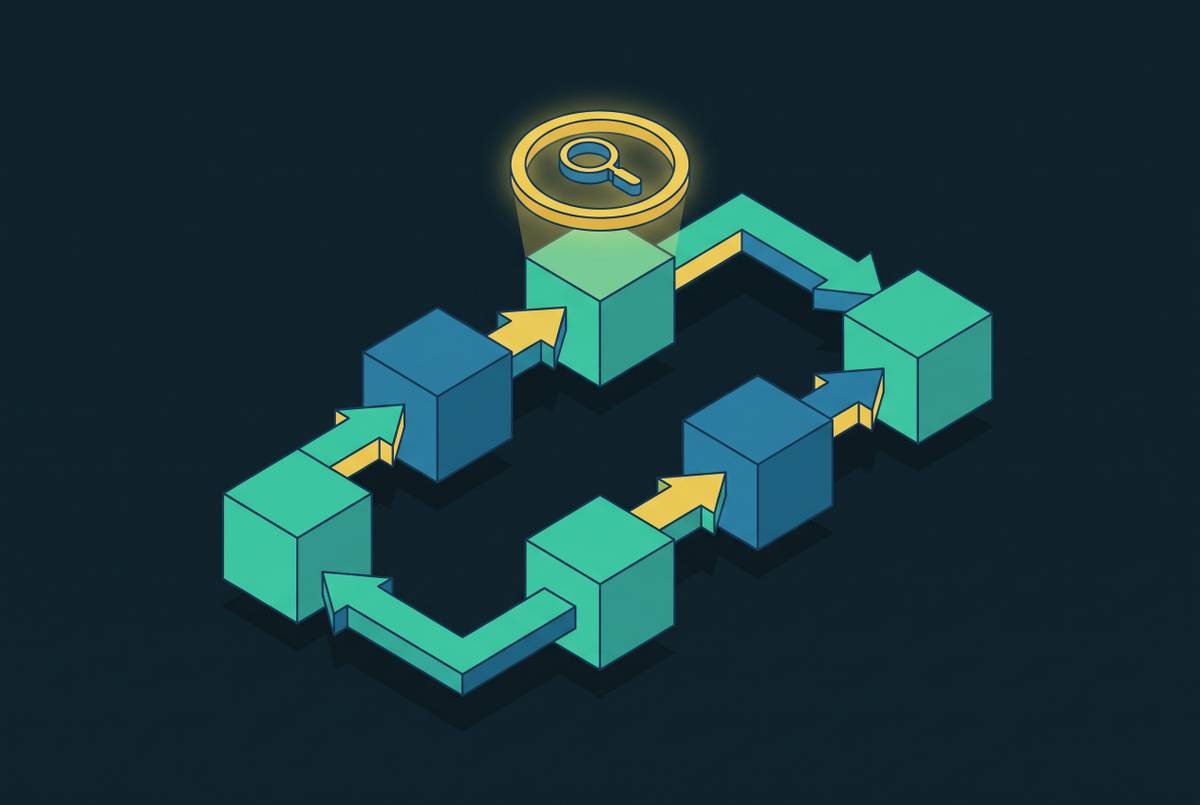
Production traces are not merely evidence to retrieve after an incident. They are the primary signal for deciding what the next prompt change should address. Recurring failure patterns inform new or updated evals, which then score candidate changes against the behavior that matters. Candidates that pass replay validation move through the canary process, and their traces feed the next cycle.
AWS AgentCore automates this sequence by analyzing traces and evaluation outputs to recommend improvements to system prompts and tool descriptions. Batch evaluation tests those recommendations against known use cases. A/B testing assesses whether improvements hold under real conditions. A proposed change carries a reason grounded in execution evidence and a route for testing that reason.
Harness iteration gives teams a practical intervention surface when they cannot retrain the backbone model they rent. Changes to prompts, tools, parsers, retry policies, and skill instructions remain externalized and reviewable while model weights stay fixed. Those changes can be inspected, audited, and rolled back as software-engineering improvements. Continuous prompt change management therefore does more than prevent unsafe edits.