LangGraph Wrong-Answer Runs as a Production Signal Class Distinct From Exceptions
State snapshots and routing logs expose silent failures that successful execution cannot.
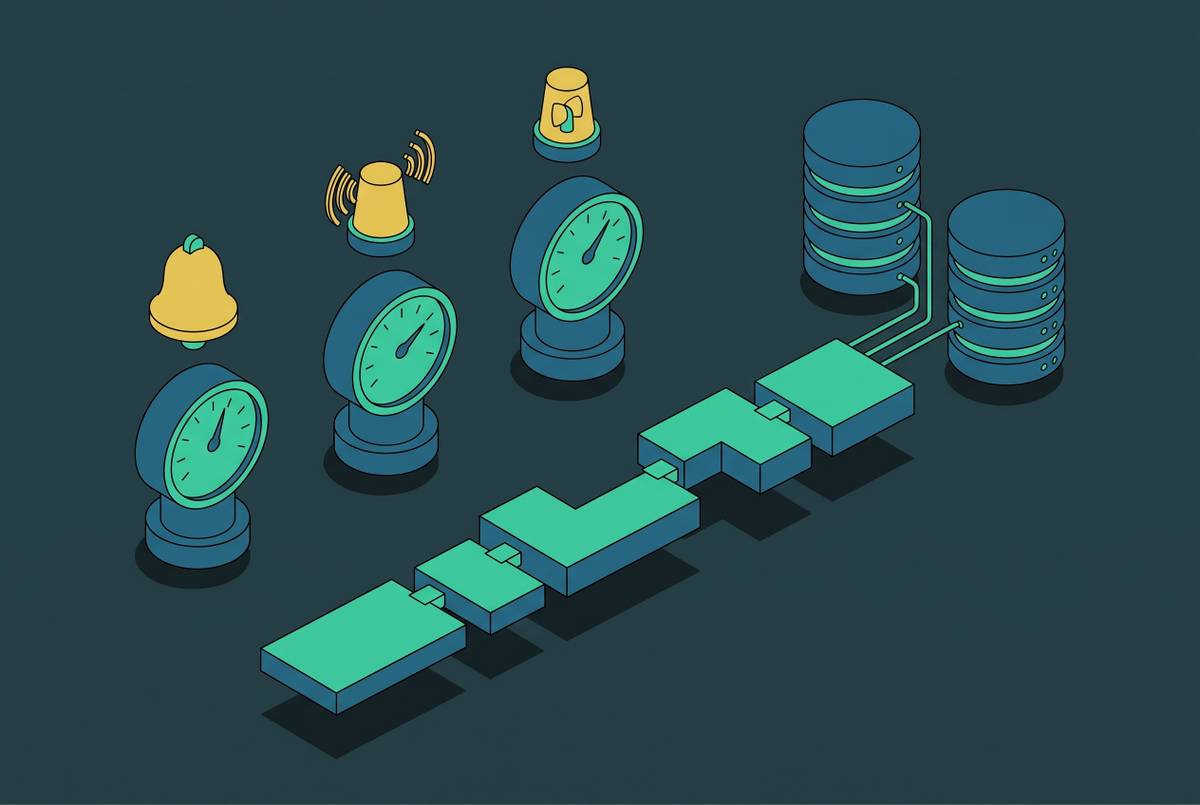
LangGraph wrong-answer runs are a production signal class distinct from exceptions because a graph can complete successfully while producing an incorrect answer. Silent tool failure detection in production multi-agent pipelines requires state snapshots, routing-decision logs, edge-traversal metrics, and node-level token and latency tracking. These signals expose failures that successful HTTP calls and clean stack traces cannot, and make both the state transition and the final answer units of diagnosis.
Why LangGraph's failure mode breaks the monitoring contract
Traditional monitoring becomes actively misleading when successful execution is treated as evidence of a correct outcome. Its contract assumes that failure is louder than success. An exception propagates, a status code changes, or a timeout fires. In a wrong-answer run, however, the HTTP call succeeds, tokens stream, and latency looks normal while the answer is wrong. The infrastructure reports success without evidence that the task was completed correctly.
This is more than an absence of alarms. A fluent, well-formatted answer produces counterfeit success signal for downstream consumers that cannot distinguish plausibility from correctness. Error rates remain flat, so alerting stays quiet while incorrect results accumulate. By the measures the standard stack tracks, the system is not degrading. The operational defect exists outside the definition of failure used by that stack.
A 19-node financial pipeline illustrates the gap. The graph traversed every node, satisfied every edge condition, and wrote its final output without triggering an alert. Yet it was misclassifying tax jurisdictions for weeks. Its observability stack could establish that the pipeline ran, but not that it ran correctly. The missing distinction was between execution success and outcome success, which are separate claims requiring separate evidence.
How LangGraph's graph primitives produce wrong answers without exceptions
LangGraph's Pregel/BSP runtime model makes superstep execution the framework within which graph work proceeds. Its typed channels, reducers, and conditional edges set the rules for how state changes and which nodes run. Those guarantees operate below semantic correctness. A valid state update can still discard information that a later node needs, and a permitted edge can still lead to the wrong branch for the task.
State consists of typed channels with their own update semantics. A reducer that overwrites where it should append can therefore corrupt downstream work without violating the engine's execution rules. The write lands cleanly, but its meaning is wrong. A downstream node then acts on the state it receives, even when that state no longer contains an upstream constraint. Nothing about successful execution establishes that the constraint survived.
The graph can still answer after choosing the wrong branch, so a routing defect need not become a runtime error. As input distributions change, classification confidence can drift, and a decision that passes the checks in place can become consistently wrong for the inputs. The resulting output may remain entirely plausible.
Subgraphs add another boundary at which execution and meaning can diverge. A failure can originate inside a child graph and become visible only in the parent's final state. Evaluation that flattens the parent-child topology loses that distinction. It sees the eventual result without preserving where the defective state crossed a boundary, making a structural failure look like unexplained answer variability.
The three recurring failure shapes in production LangGraph traces
Routing drift, state corruption, and tool schema drift provide a nonexhaustive diagnostic vocabulary for wrong-answer runs. Routing drift appears when a conditional edge selects an expensive or incorrect branch for a class of inputs. The output can still look correct. In a financial pipeline, a misrouted transaction sets the wrong jurisdiction context, after which each calculation can be correct given that context. A trace with the routing inputs and the chosen edge would show the upstream decision that the downstream calculations simply followed.
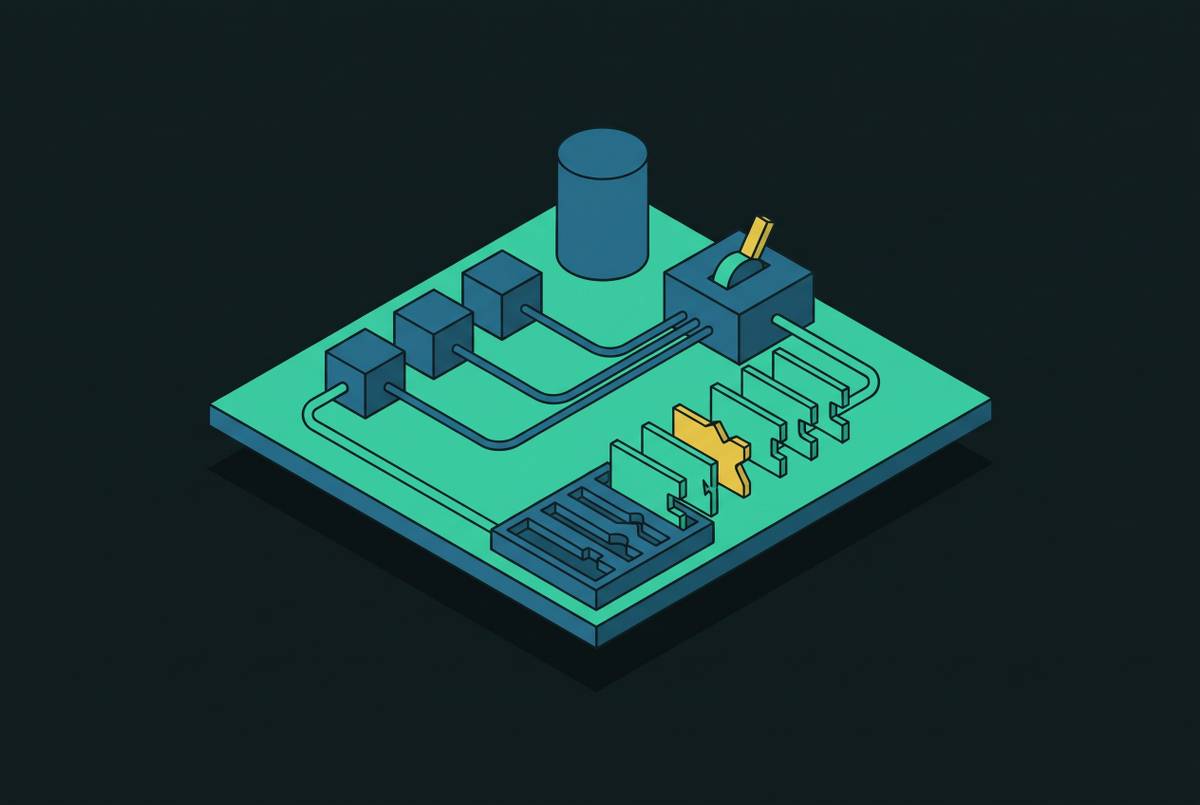
State corruption occurs when information is overwritten, left out at a boundary, or restored in the wrong way. A reducer can replace information it should accumulate, while a schema mismatch at a subgraph boundary can leave the parent state unchanged without an error. The agent then proceeds on stale data. A synthesis step running on zero documents can produce a confident but ungrounded answer. Checkpoint write defects can also cause memory regression on a later turn, separating the visible failure from the update that caused it.
Tool schema drift occurs when the tool interface given to a node no longer fits what that node does. PR #196 in truongpx396/agent-core-demo, October 2026, showed that a follow-up prompt got 15 tool schemas because every node got the same tool-bound client. Prompt-token cost ballooned and cold cache reads were triggered. The fix stripped tool bindings from nodes that did not need them. Node-level token tracking would have made that mismatch visible.
Tool misuse can also persist as retries. An ambiguous description or a node prompt that does not acknowledge tool failure can keep the agent attempting a mismatched tool. That pattern gives teams reason to check the schema, description, or prompt, but does not show that the model itself is poor. The trace is useful because it preserves the repeated attempts and their context along with the eventual answer.
Why the final answer is the wrong unit of evaluation for a state machine
Final-answer scoring hides transitions when a faulty path still leads to an acceptable result. A LangGraph agent includes typed channels, conditional edges, retries, subgraphs, parallel fan-in, and a checkpointer. The final message collapses those mechanisms into one result. It cannot identify which node read stale state, which reducer overwrote a constraint, or why a router selected an expensive branch.
A graph scoring 0.93 on TaskCompletion against a regression set demonstrated this limitation. Its final answers looked fine in that evaluation, but the cost per query had doubled. A retry loop fired three times before the search tool gave up and the model fabricated an answer, while a reducer overwrote an upstream constraint. None of those defects moved the answer-level metric.
A trajectory match improves visibility by showing which nodes a run visited, but that still does not establish whether each node received valid state. Path identity is not transition correctness. Node-input correctness asks whether the node received the state it expected, while node-output correctness asks whether the state diff respected the channel schema. Edge-routing correctness evaluates the branch against the state at decision time, and checkpoint-replay determinism tests whether saved state reproduces the same trajectory.
The alternative evaluation unit must preserve all of that context. It is the state-transition four-tuple of (state_before, node, state_after, edge_taken). An evaluation set then spells out the sequence of transitions a run should follow as well as the final answers it should give.
What to instrument when a LangGraph pipeline returns wrong answers but no errors
To make those transitions inspectable, teams should capture full state snapshots before and after high-stakes nodes, at human review gates, and wherever branches have meaningfully different consequences. This targets state corruption directly. A delta records what changed, whereas a full snapshot records the state available to the node. When a node reads stale data, its update can look normal even though its starting state was wrong. LangGraph's checkpointer saves state at every superstep, leaving systematic querying and comparison as the work needed to make those records diagnostic.
Edge-traversal metrics should record which paths production traffic actually takes relative to the paths designed for it. A graph routing most traffic in one direction behaves differently from one that splits traffic evenly. That distribution exposes routing drift but does not explain it. Routing-decision logs should therefore retain the inputs, confidence, prompt, model response, and parsed output that determined the branch. The distinction is between knowing that a run reached node B and knowing that it did so because the classifier returned jurisdiction=California with mid-range confidence for the recorded input features.
Structured decisions also make changes over time queryable. Engineers can examine which inputs correlate with low-confidence decisions, which nodes show high variation in routing distributions, and which cases later required correction. Confidence alone is not a correctness test. Preserving both the decision and its basis allows a correct low-confidence choice to be distinguished from an incorrect high-confidence one when the run is evaluated.
Node-level token and latency tracking completes this instrumentation layer. Increased consumption or slower execution can indicate prompt ambiguity or tool schema mismatch before output becomes detectably wrong. Such changes are diagnostic leads that require confirmation of semantic failure. The unnecessary schemas in the follow-up prompt would have appeared as a token-count anomaly at the affected node. With state and routing records, that anomaly shows teams which part of the graph to check.
Attributing a wrong-answer run to its specific harness layer
Once teams can see a faulty transition, they must find which harness layer caused it. The relevant targets are node prompts, tool schemas and descriptions, graph topology and routing logic, memory and state, and reducer and channel configuration. These require different fixes. Treating all of them as model-quality problems discards the evidence needed to choose between a prompt edit, a tool-interface change, and a code correction. The model may be doing exactly what its harness instructed.
Node and router prompts should be treated as separate study targets because each governs a different decision. A routing log can isolate a drifting router prompt. Tool calls require equally specific evaluation. Scoring whether the correct tool was called with the correct arguments reveals defects that scoring the assistant's prose cannot. Descriptions written for humans rather than for the model can explain why it keeps misusing a tool, without a need to change the model itself.
Graph topology and routing logic require a comparison between expected and observed edges. For memory defects, teams need snapshots that show which earlier context a node had when it acted. A locally coherent answer can be globally wrong because that context was absent or misreferenced. An overwrite caused by configuration requires code review and schema validation.
IBM's AgentFixer framework illustrates how attribution can operate at different levels without model retraining. Its LLM-as-a-judge tool directly analyzes raw LLM call outputs. Detection tools and an interactive GPT-4o dialogue over aggregated reports find the most common kinds of failure and rank agents by how severe their errors are. Raw-call analysis shows how an agent behaved in a single call, while aggregated reports help teams decide which failure patterns to look into across agents.
Validating harness fixes against real traces before shipping
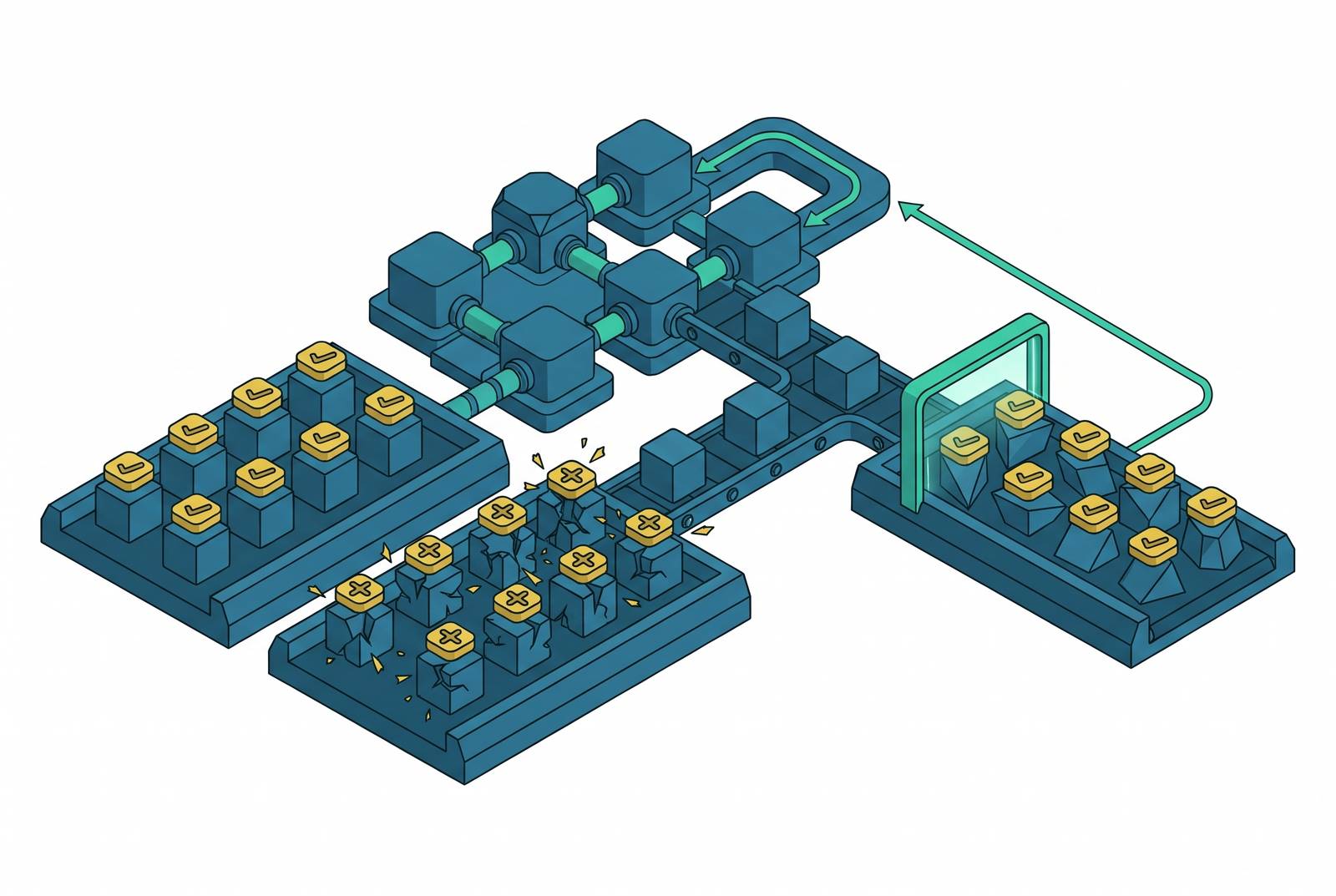
A proposed harness fix should be replayed against the traces that exposed the defect before it reaches users. Manual review cannot establish that a prompt edit preserves routing behavior across production inputs. The same applies to changes in models, tool signatures, or graph topology. Teams must test each change against a golden evaluation set before merge, with a small set at first that covers more cases over time. This allows transition-level checks to grow without requiring a large labeled dataset at the outset.
Checkpoint replay provides the starting point for that validation. Re-running from saved state with the same inputs tests whether the downstream trajectory can be reproduced. Reproducibility is itself a diagnostic property. If the trajectory changes under the same conditions, nondeterminism makes it difficult to attribute an improvement to the proposed fix. A regression test needs a stable basis for distinguishing an intended correction from an uncontrolled variation.
Replay scoring must therefore examine the trajectory and its transitions along with the final message. A correct answer reached through an unexpectedly expensive or less reliable path does not validate a repair. The intended change must be explicit. A routing fix should change the faulty decision, while a reducer fix should keep the state that was lost before. Historical traces make those claims inspectable rather than leaving reviewers to judge whether the new prompt or configuration looks reasonable.
This closes the gap left by exception-based monitoring. Outcome-level observability gives teams the state, decisions, and tool context they need to find the cause of a wrong-answer run and replay the conditions in which it failed. Without that evidence, a clean execution record gives teams little to build a semantic regression test on. A reviewable fix must connect a specific harness change to an intended trajectory change on the runs that exposed the defect. Otherwise, it remains a guess that passes the current test.